CBD Labels Without the Maths Panic: A UK Shopper's Guide to Milligrams, Servings and Sensible Strengths
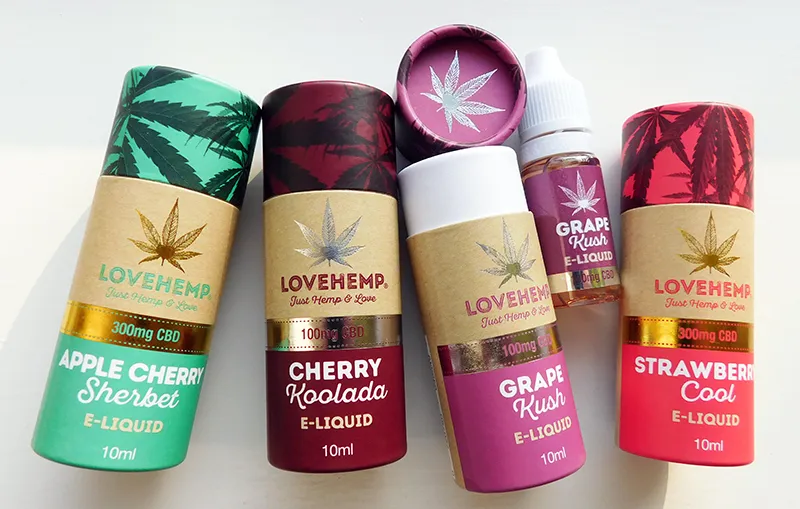
Photo: Ecig Click, CC BY-SA 2.0, via Wikimedia Commons
Start with the number that is not per drop
Most UK CBD labels lead with a big number: 500mg, 1000mg, 2000mg. That number usually refers to the total CBD in the whole bottle, not in a single dropper. It is a useful fact, but on its own it tells you very little about how much you are getting each time you use the product.
This is where a lot of shoppers get stuck. A 2000mg bottle sounds stronger than a 500mg bottle, and it may well be, but only if the bottle size and serving size are taken into account. A small, concentrated bottle can deliver more per drop than a larger, milder one. So before you compare anything, ignore the marketing adjectives and look for three plain facts.
The three numbers that actually matter
When you pick up a bottle, find these details:
- Total CBD in the bottle – usually shown in milligrams, such as 500mg or 1000mg.
- Bottle size – usually in millilitres, such as 10ml or 30ml.
- Serving size – often given as a number of drops or millilitres, such as 0.5ml or one full dropper.
From those three numbers you can work out the two figures that make comparison much easier: milligrams per millilitre and milligrams per serving.
To get milligrams per millilitre, divide the total milligrams by the bottle size. A 1000mg bottle with 10ml of oil gives you 100mg per ml. A 1000mg bottle with 30ml gives you about 33mg per ml. Same total, very different concentration.
To get milligrams per serving, multiply the milligrams per millilitre by the serving size. If the 10ml bottle contains 100mg per ml and your serving is 0.5ml, that is 50mg per serving. If the 30ml bottle contains about 33mg per ml and your serving is 1ml, that is around 33mg per serving.
Percentage strength is concentration, not a score
Percentage strength is another way of expressing concentration. It is not a rating of how good the product is, and it is not a target to chase. A 10% CBD oil means roughly 10% of the liquid is CBD. That often works out at around 100mg per ml, because 1ml of oil weighs roughly 1g.
A 5% oil is less concentrated, but it may still suit someone who uses a larger serving. A 10% oil is more concentrated, but a tiny serving could deliver less than a larger serving of a 5% product. This is why percentage alone cannot tell you what you will actually use per serving. It is one piece of the label, not the whole story.
The strength ladder, in plain English
Think of CBD strengths as rough rungs on a ladder. These are not medical doses or recommendations. They are simply buckets for comparing labels without getting distracted by hype.
- Rung 1: very low – around 5mg or less per serving. Often a larger bottle with a small serving size.
- Rung 2: low – roughly 5mg to 10mg per serving.
- Rung 3: moderate – roughly 10mg to 20mg per serving.
- Rung 4: higher – roughly 20mg to 40mg per serving.
- Rung 5: high – around 40mg or more per serving.
If you are new to CBD, the sensible starting point is usually the lower end of the ladder, with a small serving and a product you can measure accurately. That is what people mean by start low and go slow. It is not about being timid. It is about giving yourself a simple baseline before changing anything.
A 5000mg bottle may look impressive, but if the serving size is tiny or the dropper is awkward to measure, it may not be the simplest place to begin. A smaller total in a bottle with clear serving information can be far more practical.
A worked example with a dropper
Suppose you have a 10ml bottle containing 1000mg of CBD and the label says one full dropper is 0.5ml. The bottle contains 100mg per ml, so a full dropper is about 50mg. Half a dropper would be around 25mg.
Now suppose another bottle is 30ml with 1500mg and the label says one serving is 1ml. That bottle contains 50mg per ml, so one serving is about 50mg. The total number on the front is bigger on the first bottle, but the per-serving figure is similar. This is exactly why the strength ladder is more useful than staring at the largest number on the label.
If the dropper has no clear markings, do not guess. Use a measuring spoon or syringe if the label gives millilitre serving sizes, or choose a product with a dropper that is easy to read.
How to compare two bottles sensibly
A simple routine helps:
- Note the total milligrams.
- Note the bottle size in millilitres.
- Note the serving size in millilitres or drops.
- Work out milligrams per serving.
- Compare the cost per 100mg if you want a value check.
- Look for a batch code and a lab report.
That last point matters. In the UK, a straightforward CBD seller should make batch information and third-party lab reports easy to find. You do not need to become a chemist, but you should be able to check that the product is labelled clearly and that the CBD content is stated in a way you can understand.
A cautious starting point without the drama
If you are trying CBD for the first time, pick a lower rung, use one serving as stated on the label, and keep a short note of what you used and when. Do not stack several new products at once. Do not jump from a low strength to a high strength because a bottle looks more premium. And if you take medication, are pregnant or breastfeeding, or have a health condition, ask a pharmacist or GP before starting.
The back-to-basics checklist
- Total milligrams are for the whole bottle.
- Milligrams per serving are what you actually use.
- Percentage strength is concentration, not a quality score.
- Lower strength plus accurate measuring is a sensible first step.
- Batch codes and lab reports are worth checking.
- Big numbers are marketing until you do the sums.
The strength ladder is not about finding the strongest product. It is about finding a clear, comparable starting point and moving sensibly from there.